POTRAIT OF THE SELFLESS SELF
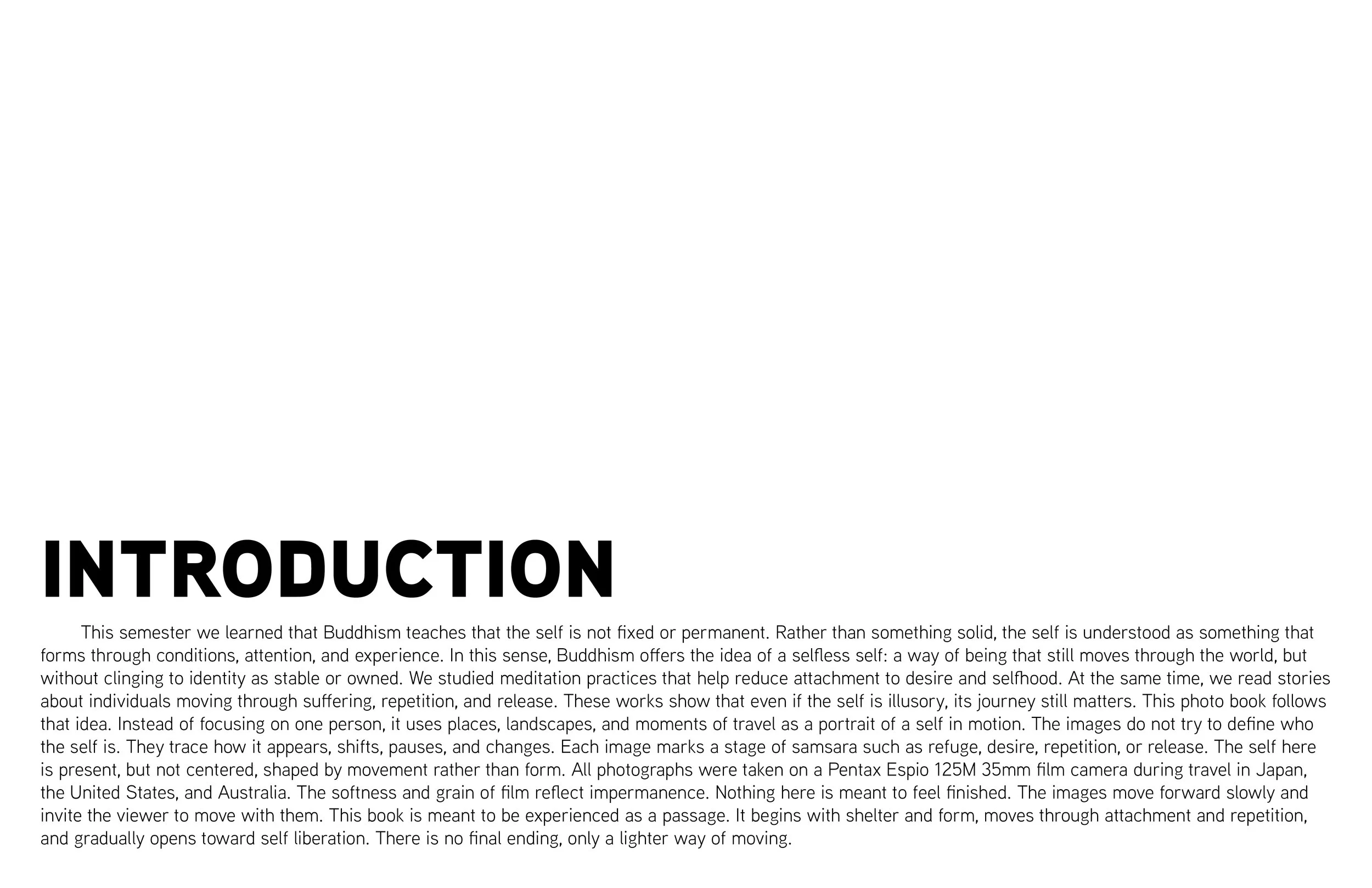
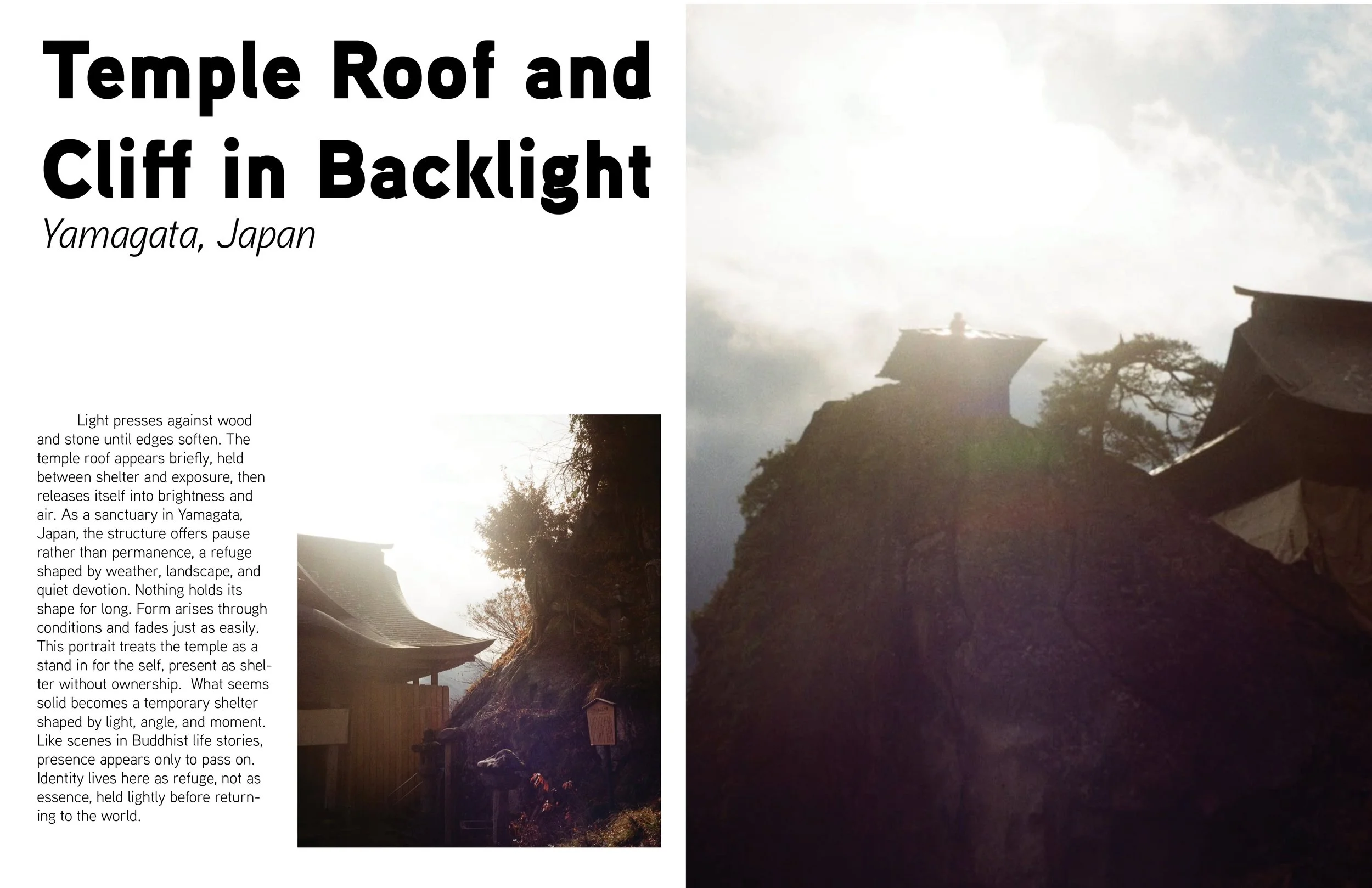
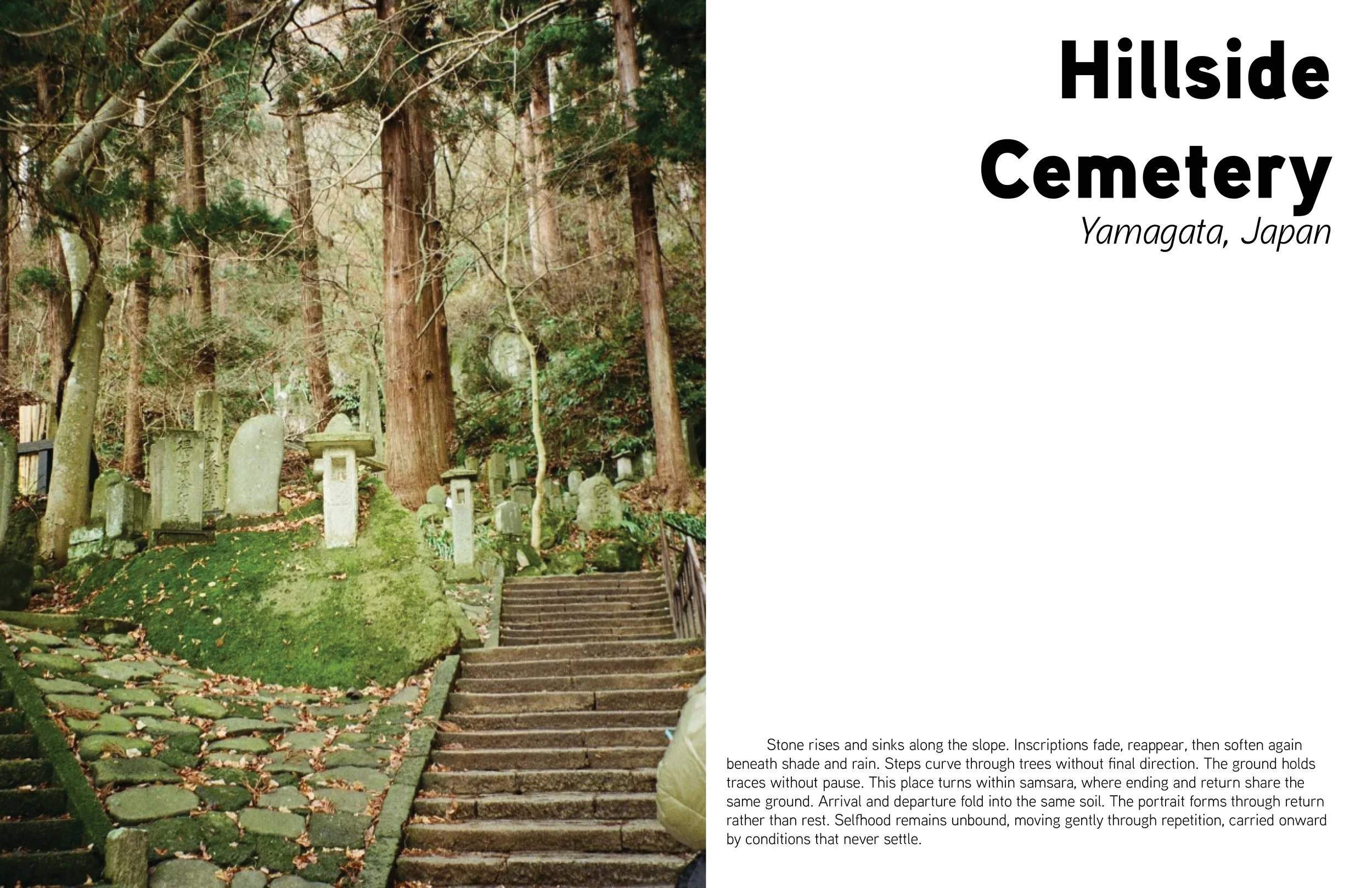
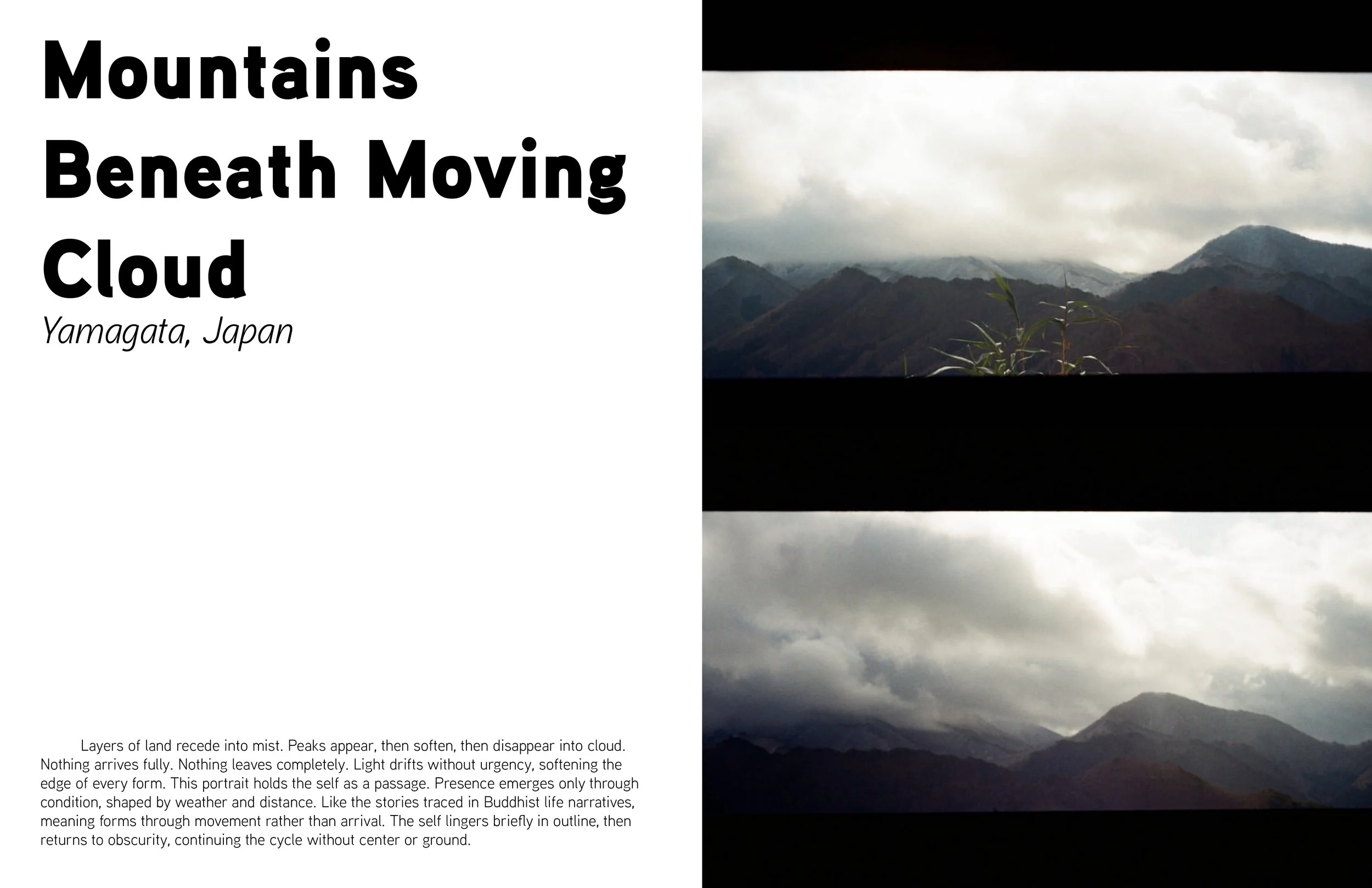
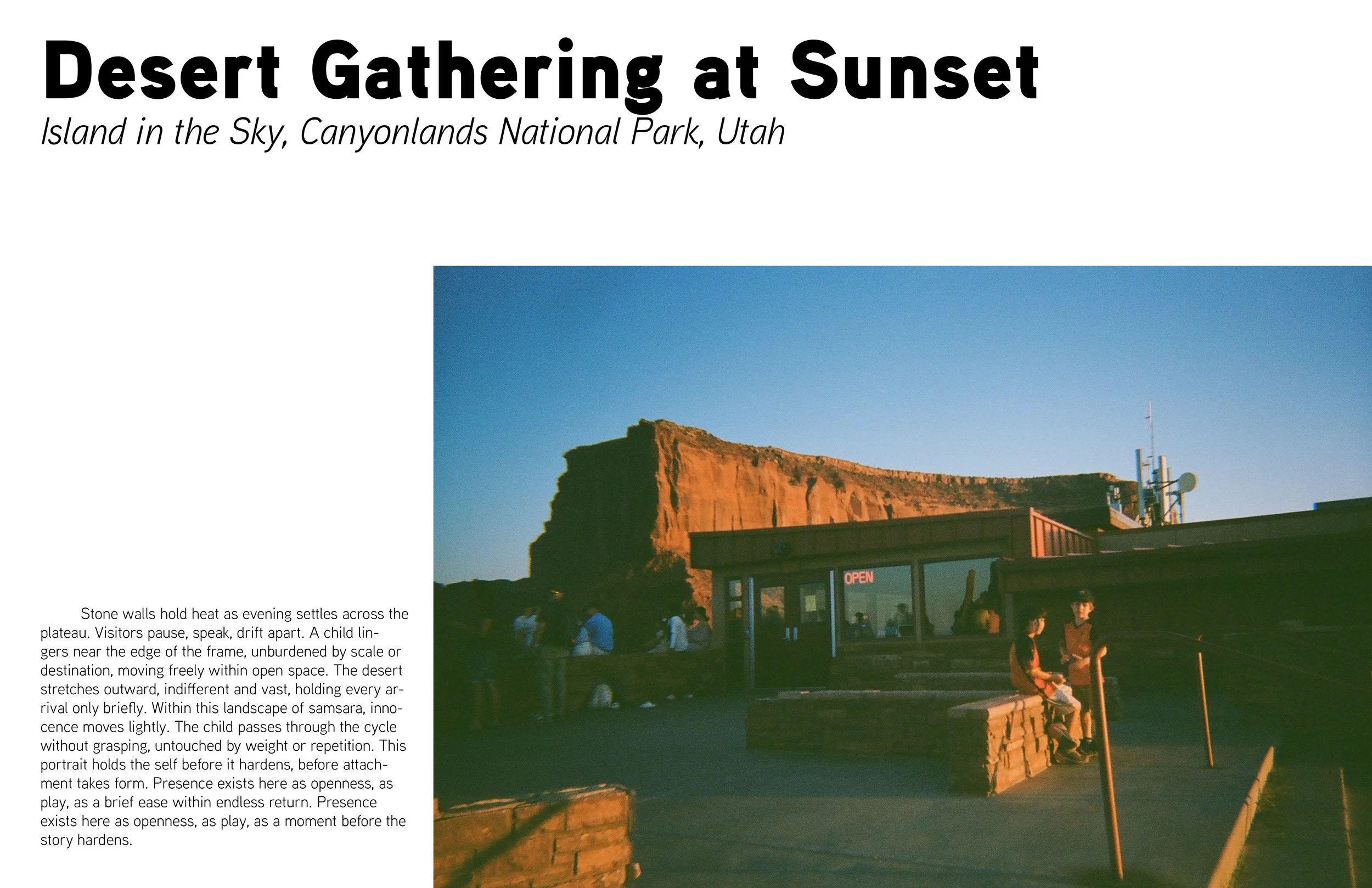
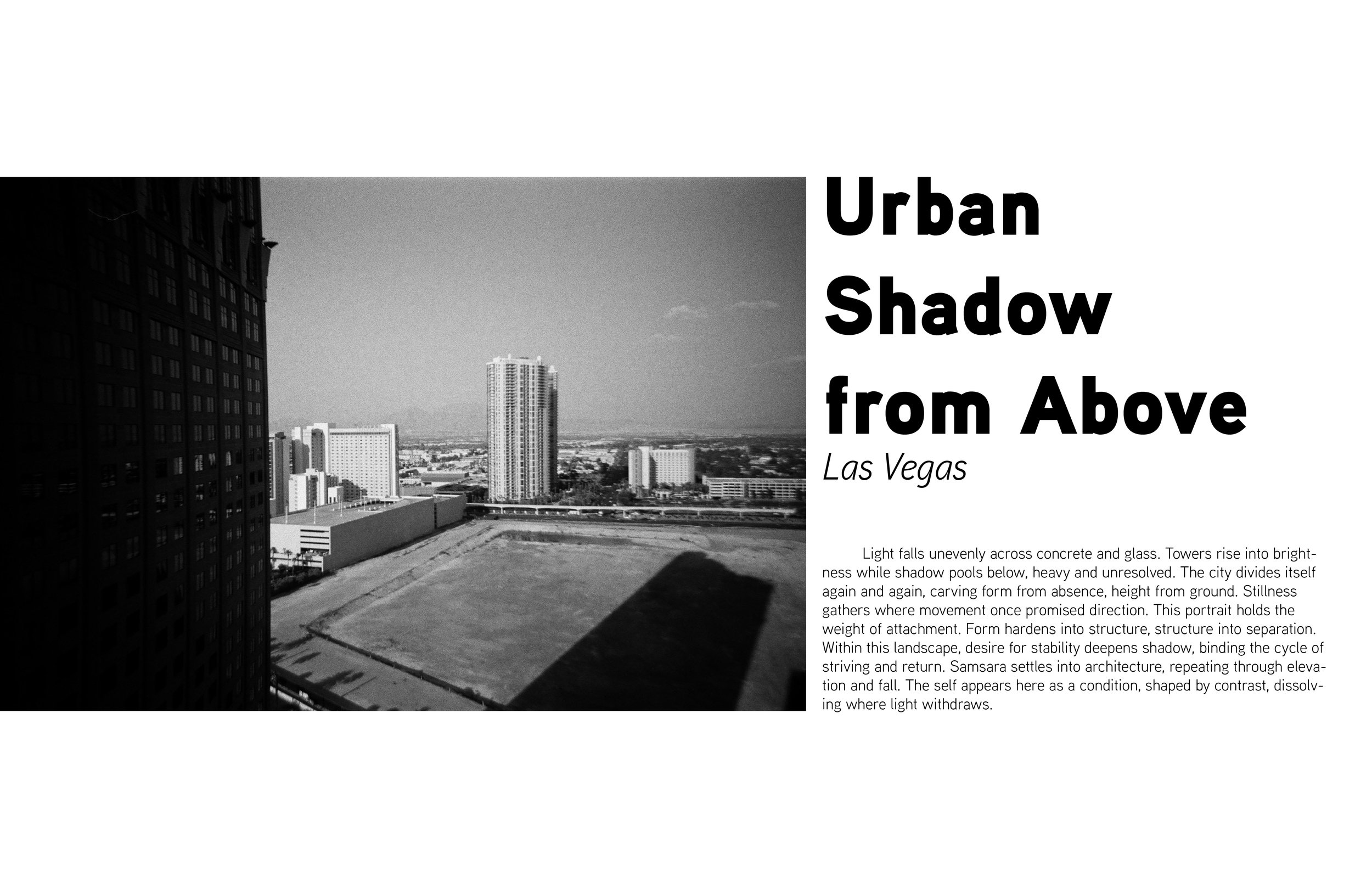
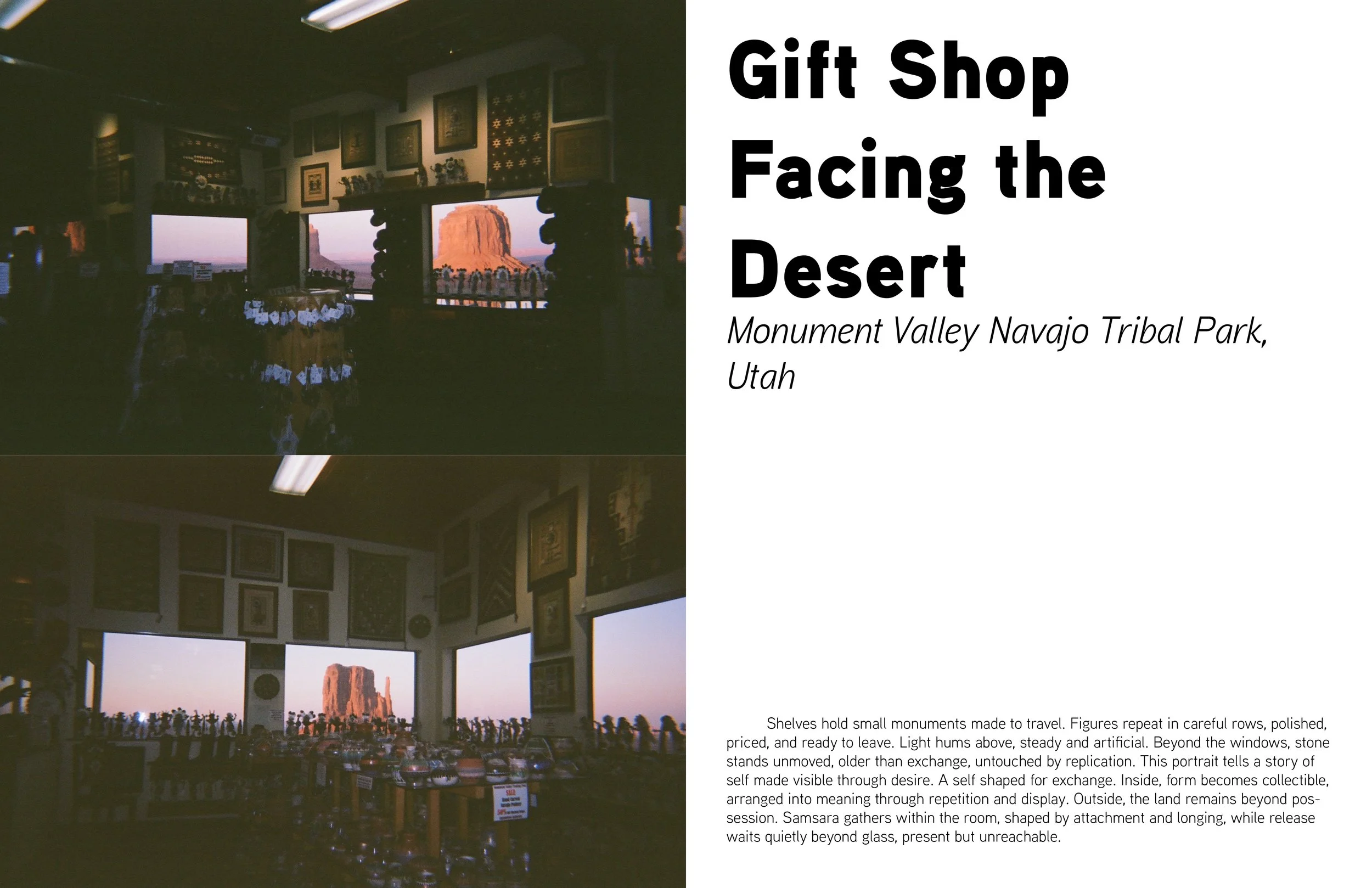
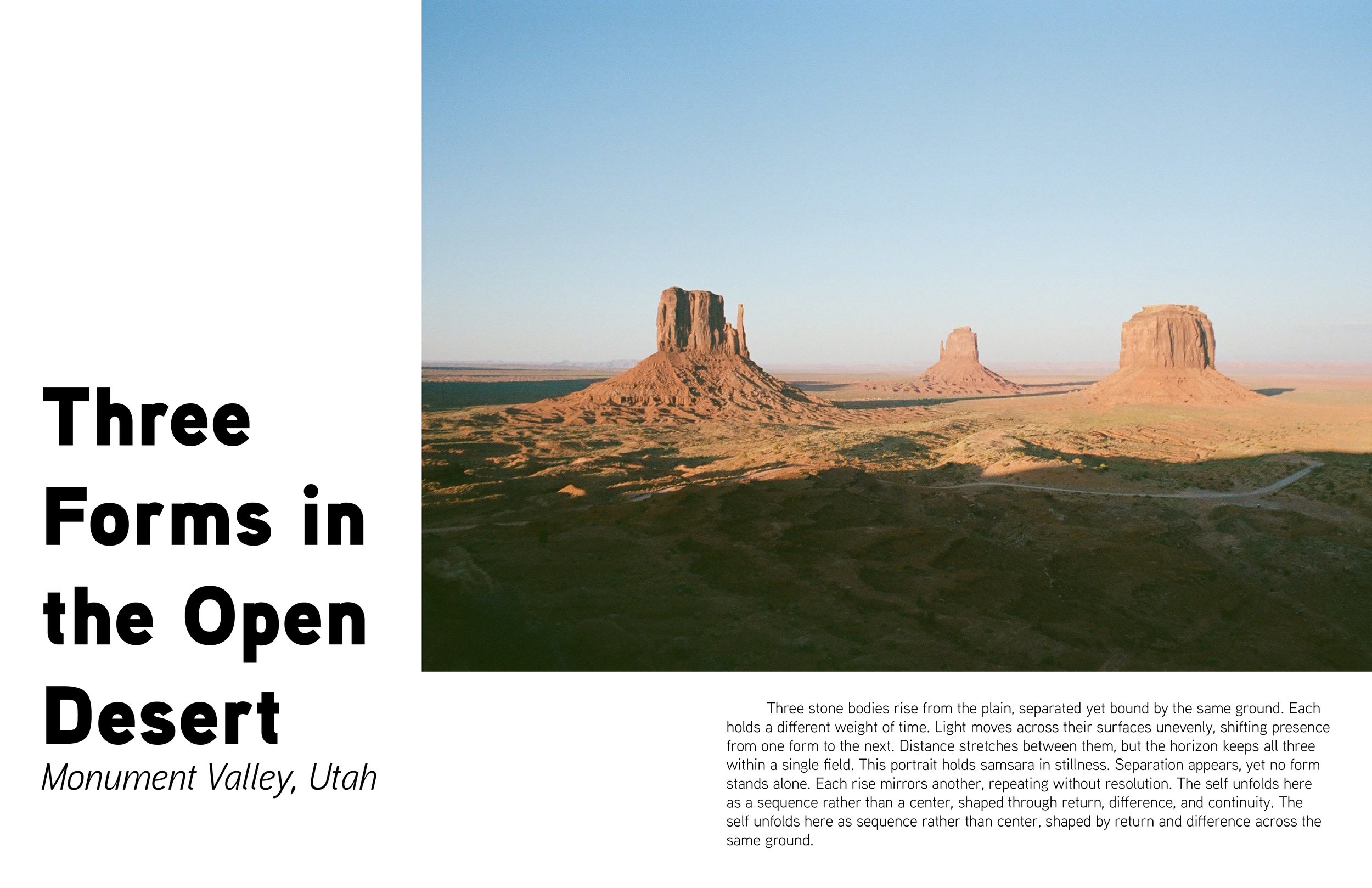
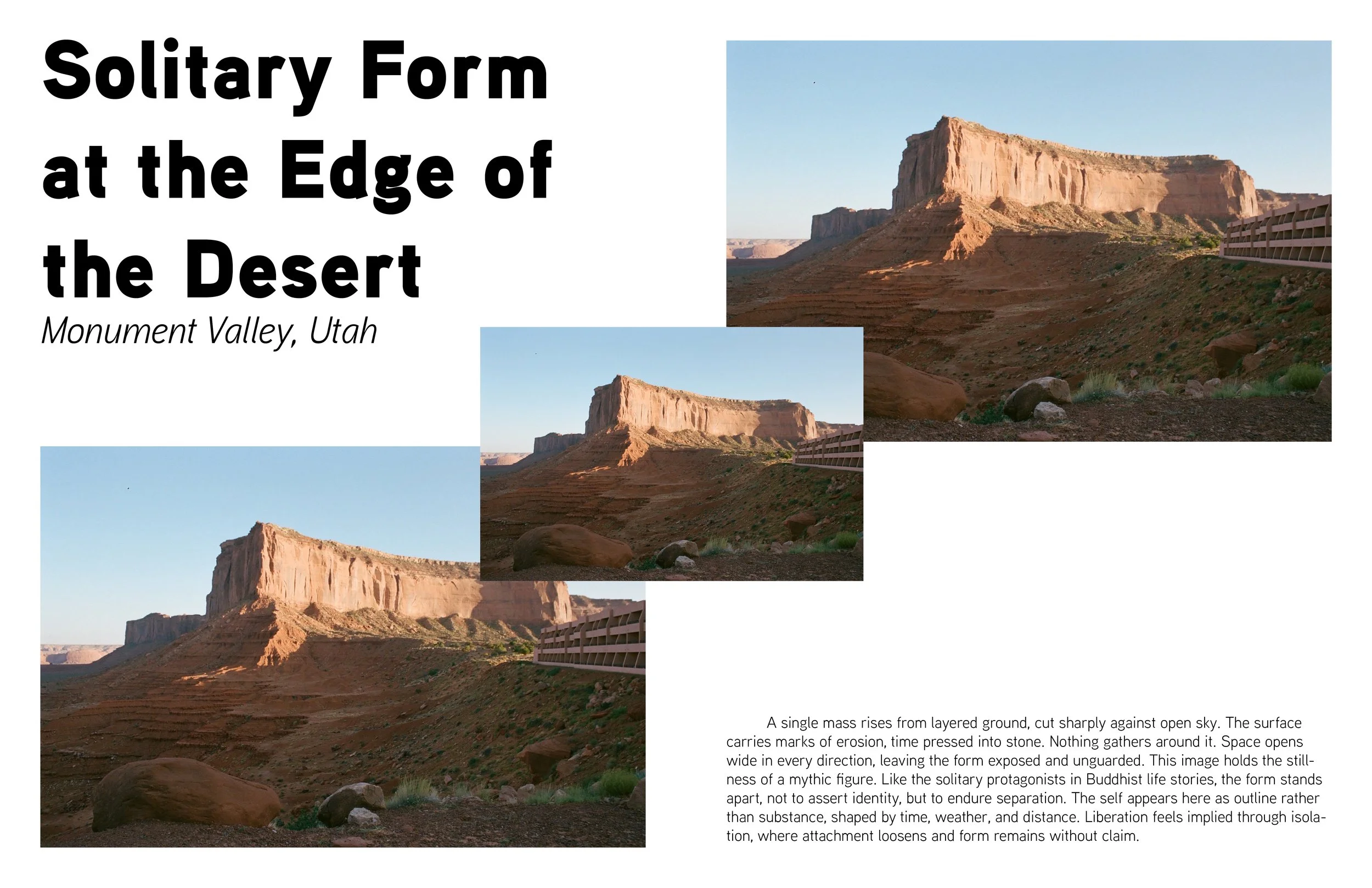
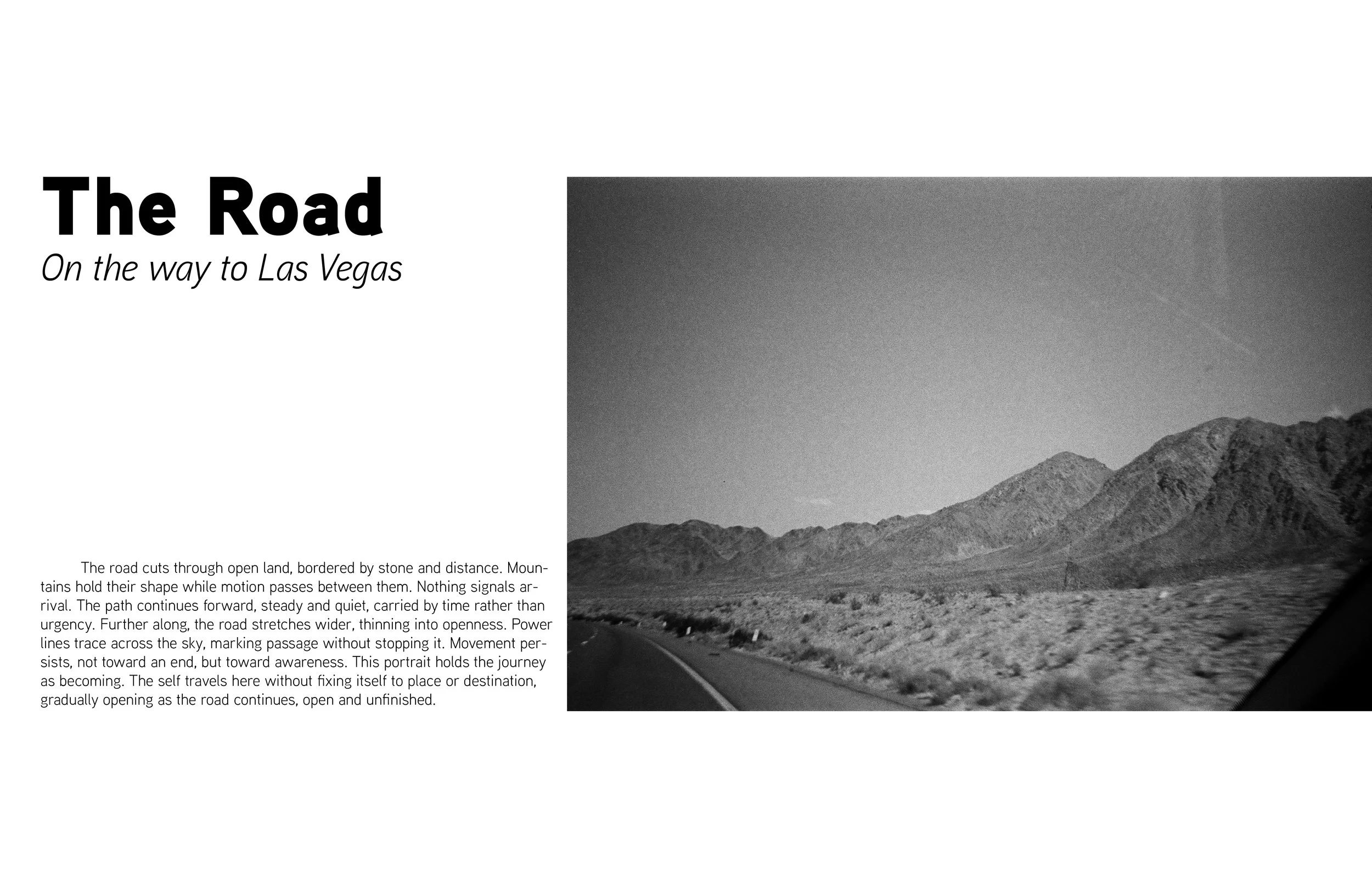
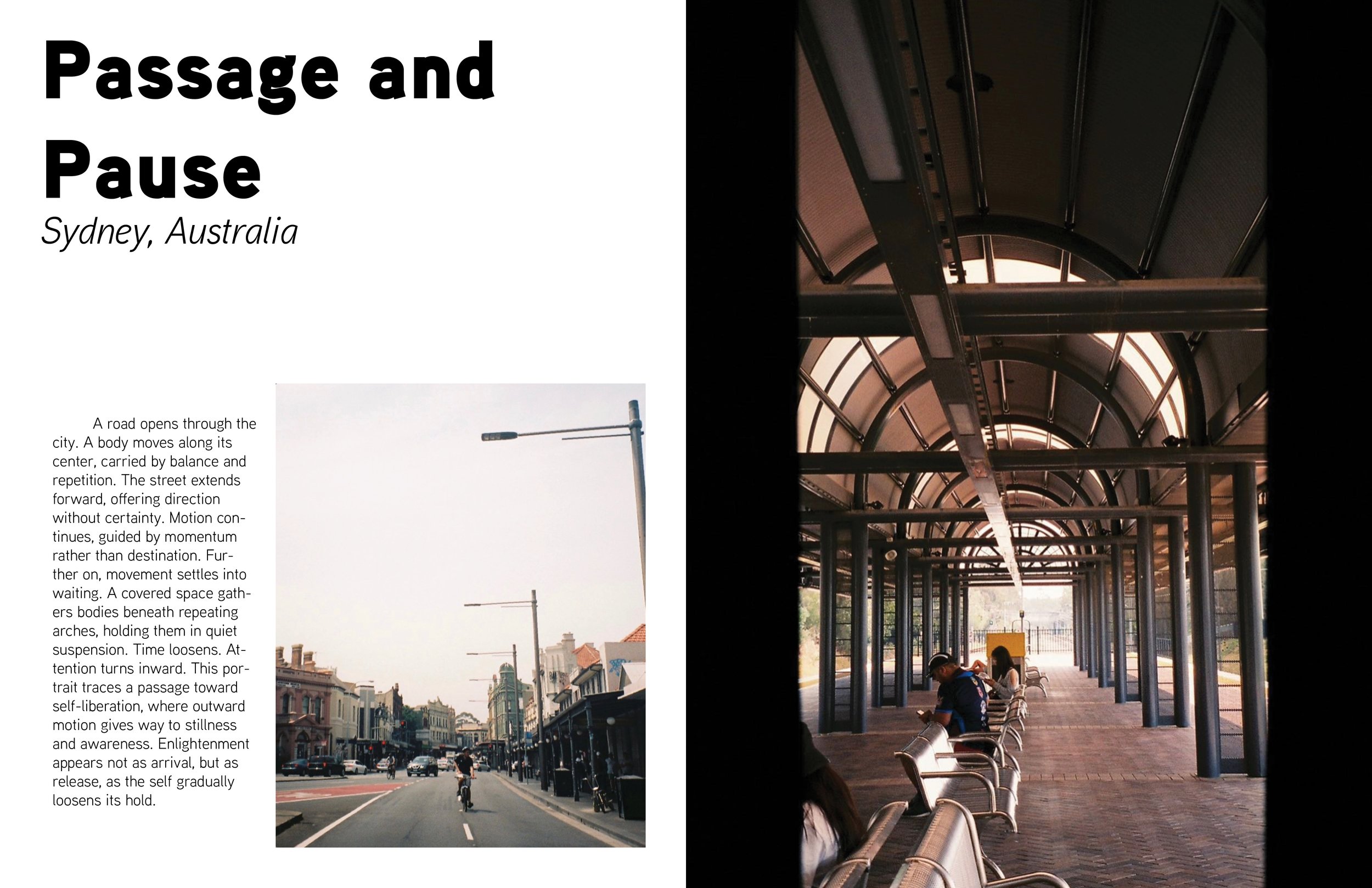
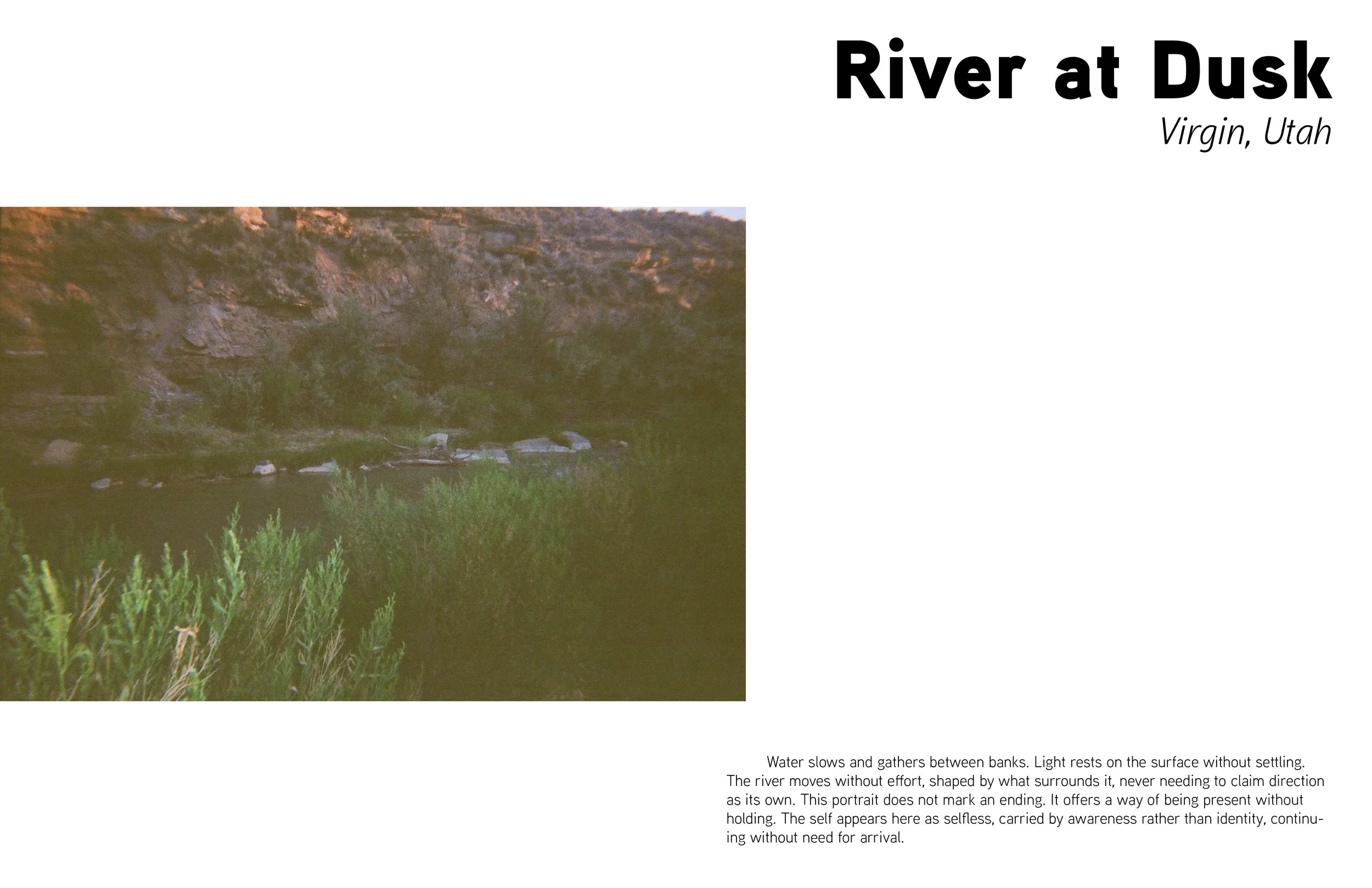
This semester we learned that Buddhism teaches that the self is not fixed or permanent. Rather than something solid, the self is understood as something that forms through conditions, attention, and experience. In this sense, Buddhism offers the idea of a selfless self: a way of being that still moves through the world, but without clinging to identity as stable or owned. We studied meditation practices that help reduce attachment to desire and selfhood. At the same time, we read stories about individuals moving through suffering, repetition, and release. These works show that even if the self is illusory, its journey still matters. This photo book follows that idea. Instead of focusing on one person, it uses places, landscapes, and moments of travel as a portrait of a self in motion. The images do not try to define who the self is. They trace how it appears, shifts, pauses, and changes. Each image marks a stage of samsara such as refuge, desire, repetition, or release. The self here is present, but not centered, shaped by movement rather than form. All photographs were taken on a Pentax Espio 125M 35mm film camera during travel in Japan, the United States, and Australia. The softness and grain of film reflect impermanence. Nothing here is meant to feel finished. The images move forward slowly and invite the viewer to move with them. This book is meant to be experienced as a passage. It begins with shelter and form, moves through attachment and repetition, and gradually opens toward self liberation. There is no final ending, only a lighter way of moving.